Infrastructure, libraries, hospitality, community centers, and more.
Built and unbuilt, these projects span decades of work at architecture firms, in independent collaborations, and with private companies, from civic buildings to new mobility systems.
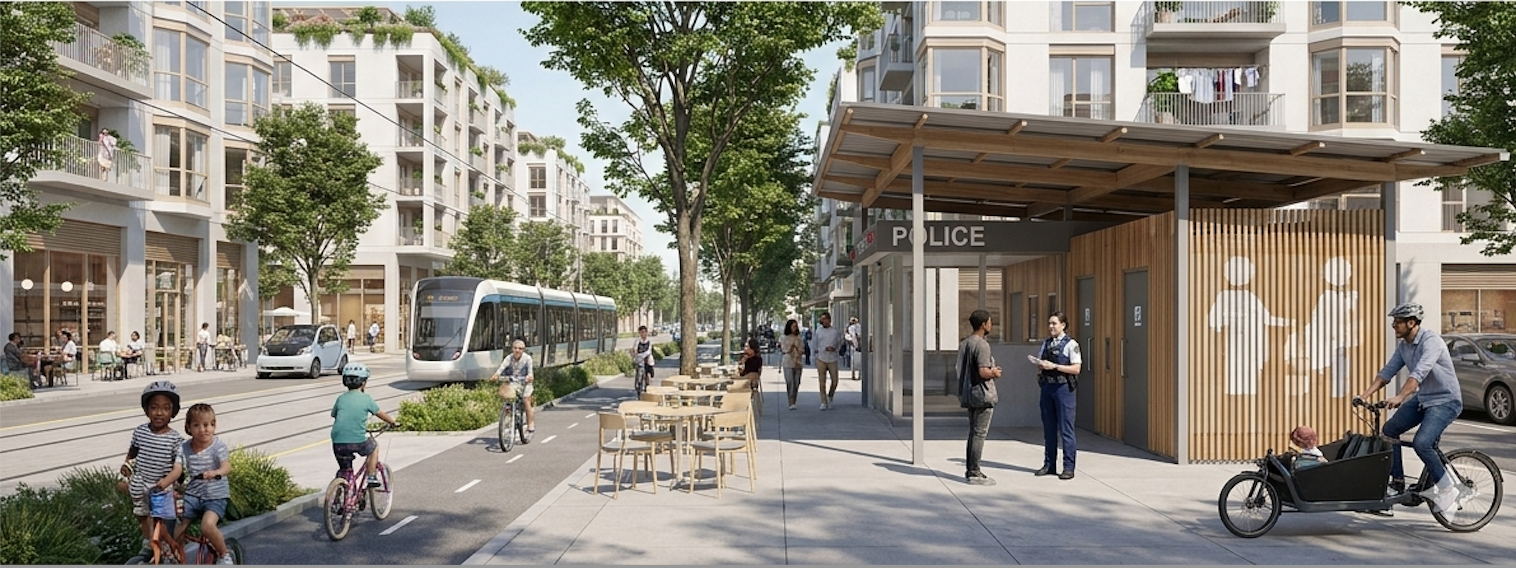
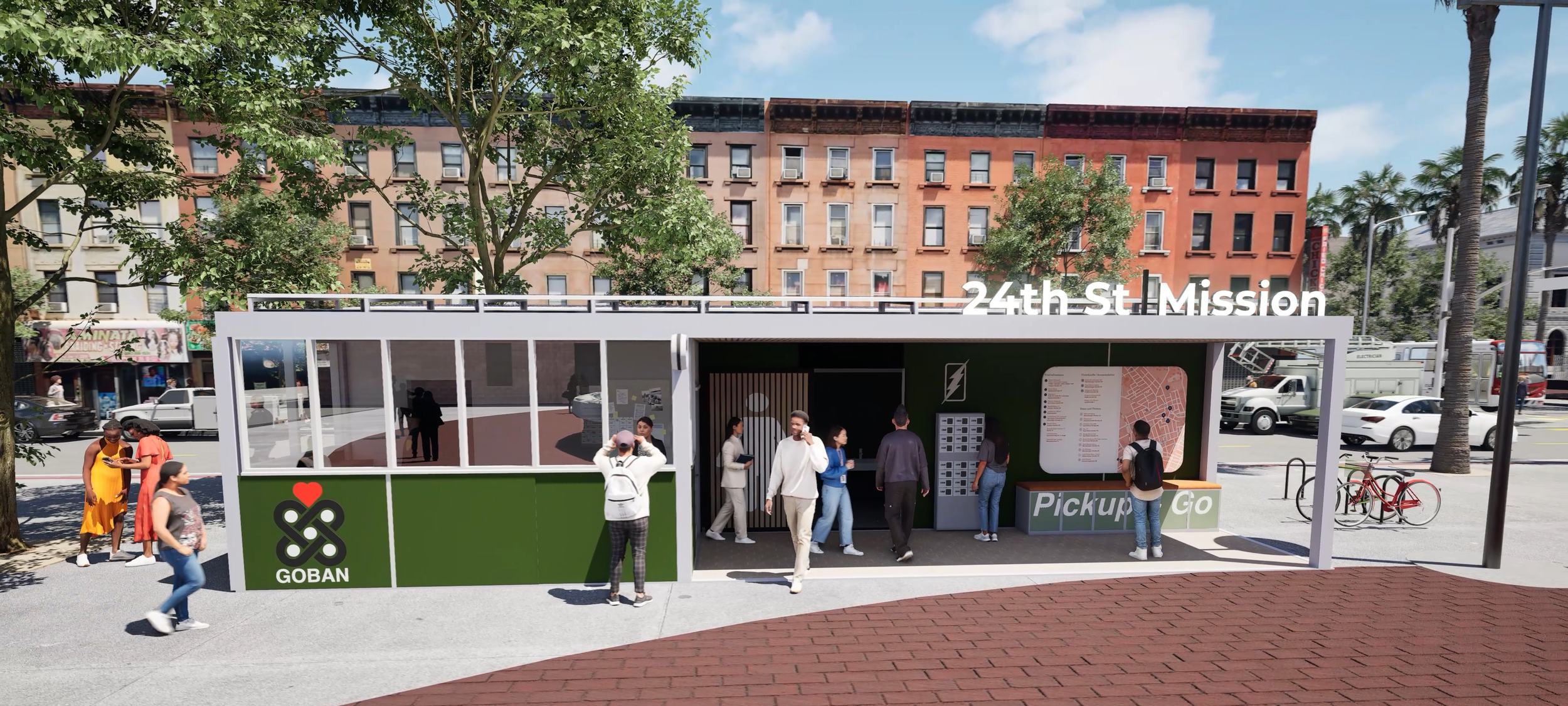
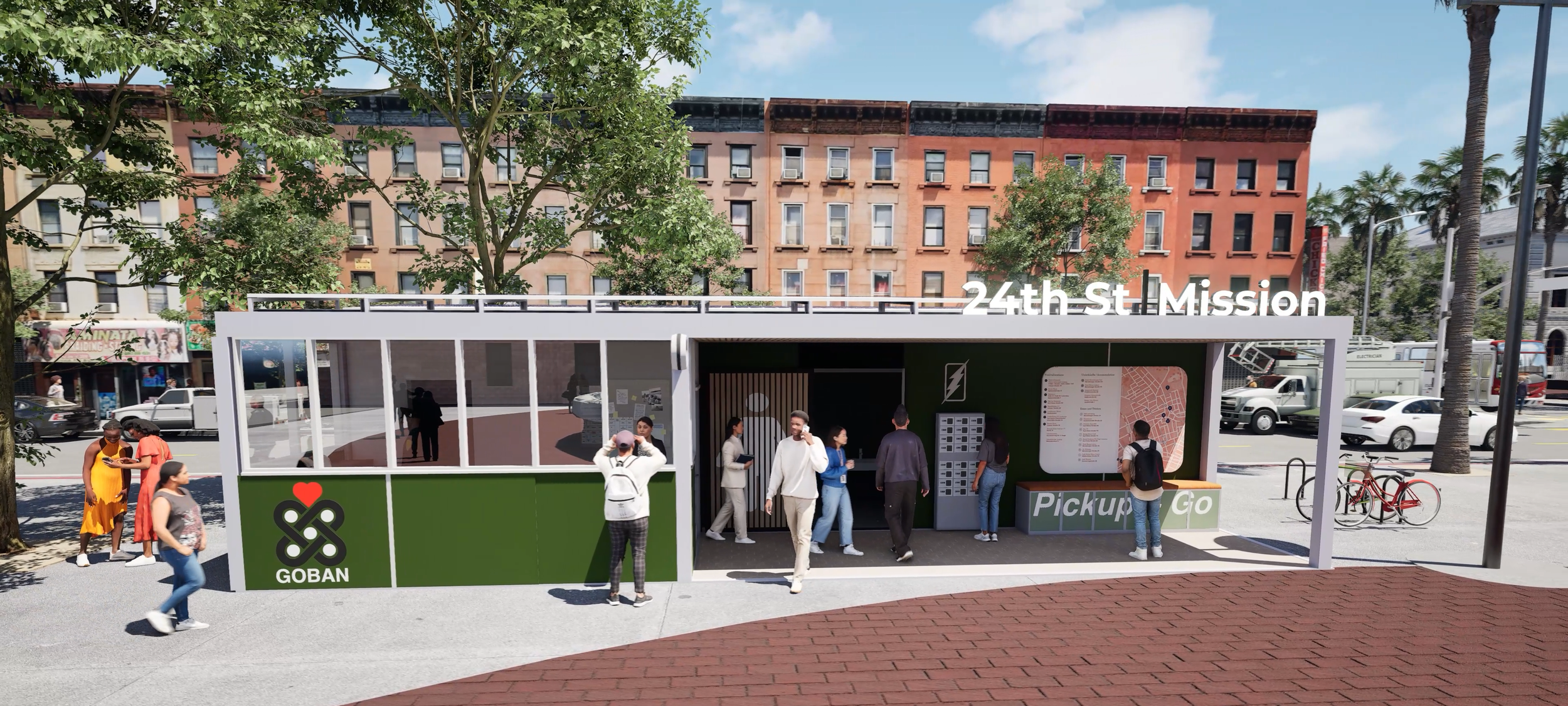
Goban is a citywide network of small, staffed civic posts. It draws on Japan’s neighborhood kōban model of small neighborhood focused police boxes strategically situated like in the board of the game of Go to have a positive impact on the vicinity around it. Each post pairs a clean, attended public restroom with a walk-up service window, parcel lockers, free WiFi & device charging, local wayfinding, and mobility tools. Too often unattended toilet facilities become magnets for anti-social behaviors which repels other members of the community from benefitting from the facility. By also serving as a home base for community policing, outreach workers, and local business ambassadors who work in the surrounding blocks. By providing a clean, safe place to support people in a variety of daily universal needs, the Goban project aims to welcome a wider mix of residents and visitors into the public realm and stimulate the commercial activity of local businesses.
The posts are prefabricated on i-Mod’s DSA-approved modular system and placed strategically along SF’s commercial and transit corridors. They are designed to deploy quickly and scale citywide. JAMTGÅRDESIGN originated the concept and led a team of the University of San Francisco, SFLuv.org, i-Mod Systems, Nibbi Construction, and Group 4 Architecture on a 2026 Boundless SF proposal.
The first step in the network roll out will be at the 24th St. BART Plaza in San Francisco. For many an arrival point into the city and the Mission District, this location supports a very dynamic community facing many challenges. a consistent, positive presence can significantly stabilize the activities and convey a more welcoming environment for everyone.
An efficient kit-of-parts
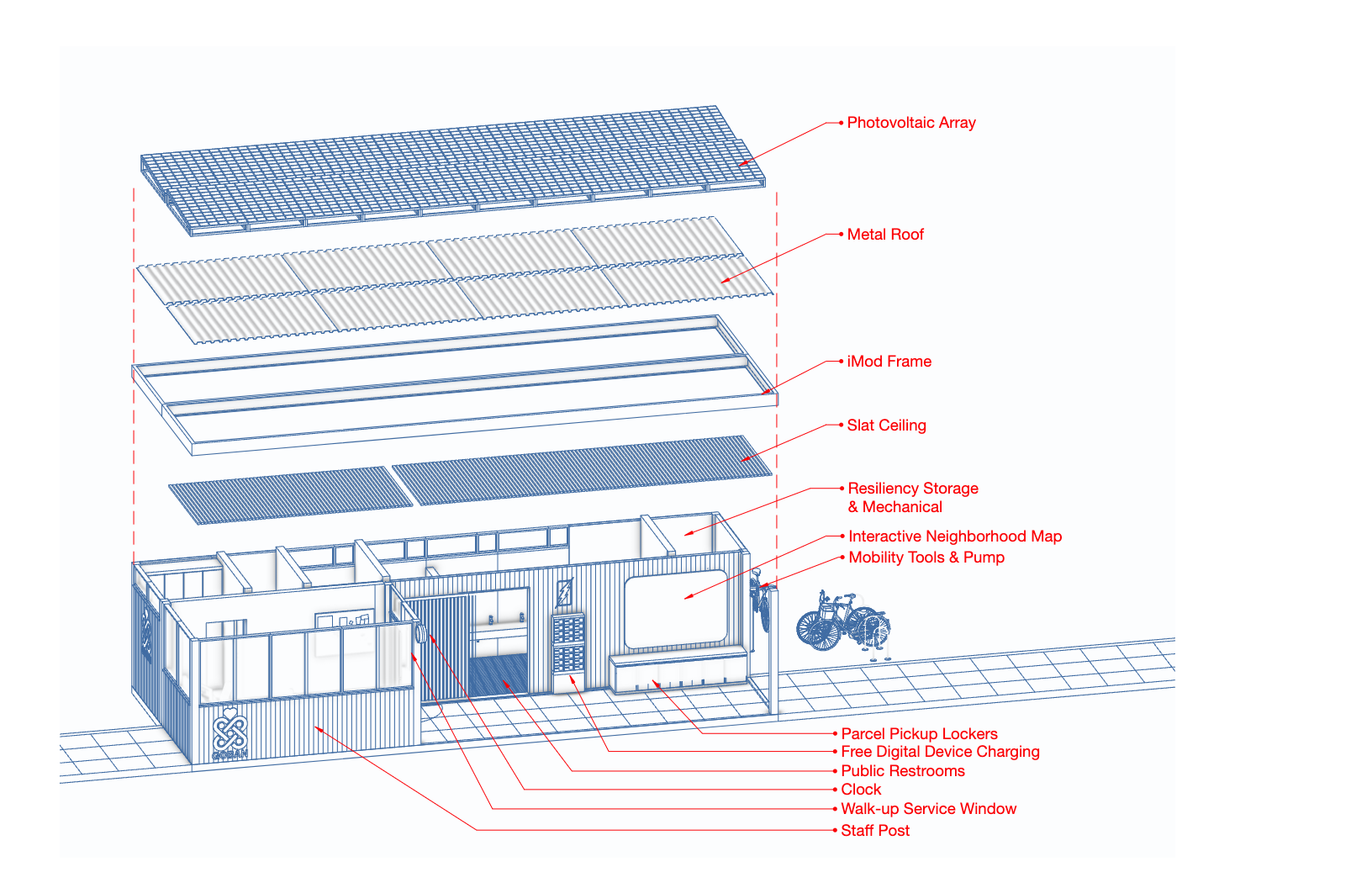
An i-Mod modular frame carries a metal roof and photovoltaic array above public restrooms, parcel lockers, device charging, an interactive neighborhood map, and resiliency storage.
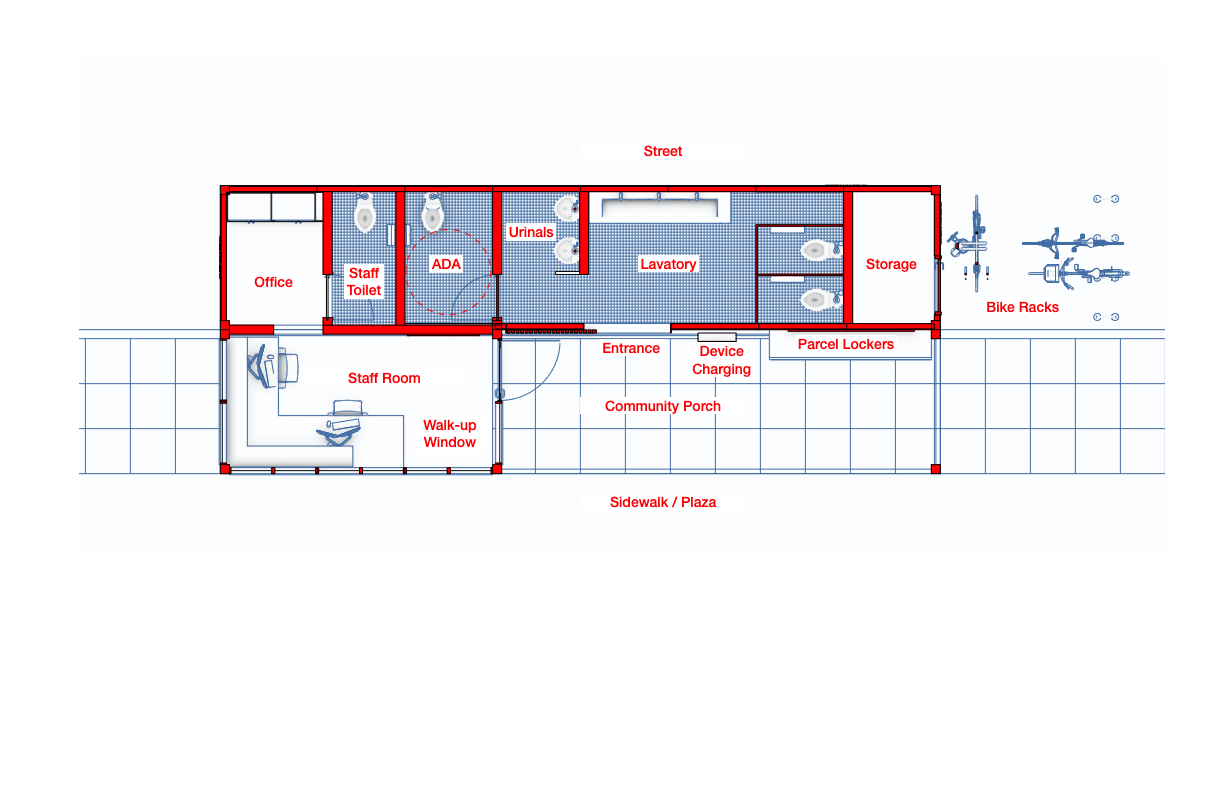
A compact post pairs a staff room and walk-up window with public, ADA, and staff restrooms, opening onto a sheltered community porch.
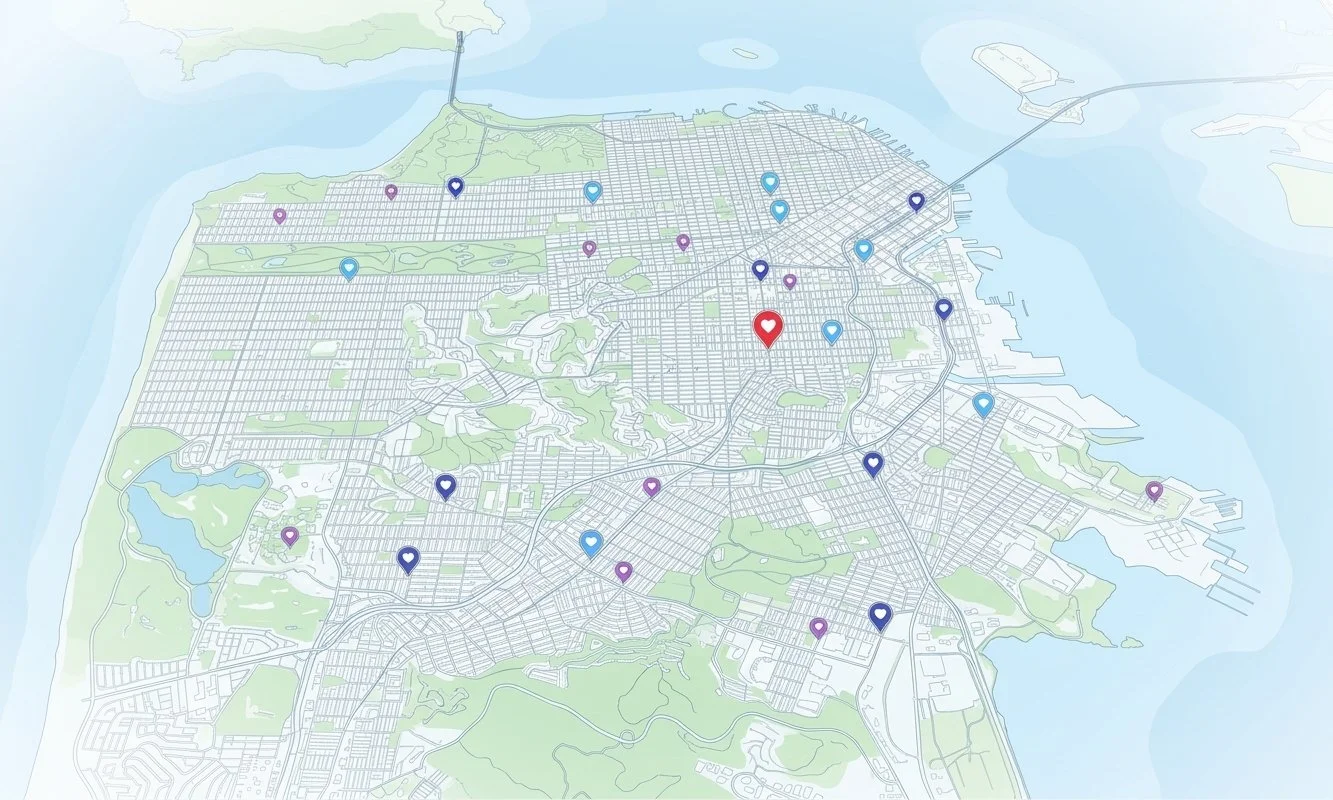
Goban posts are placed across San Francisco at a range of scales along commercial and transit corridors, with a first pilot proposed in the Mission.
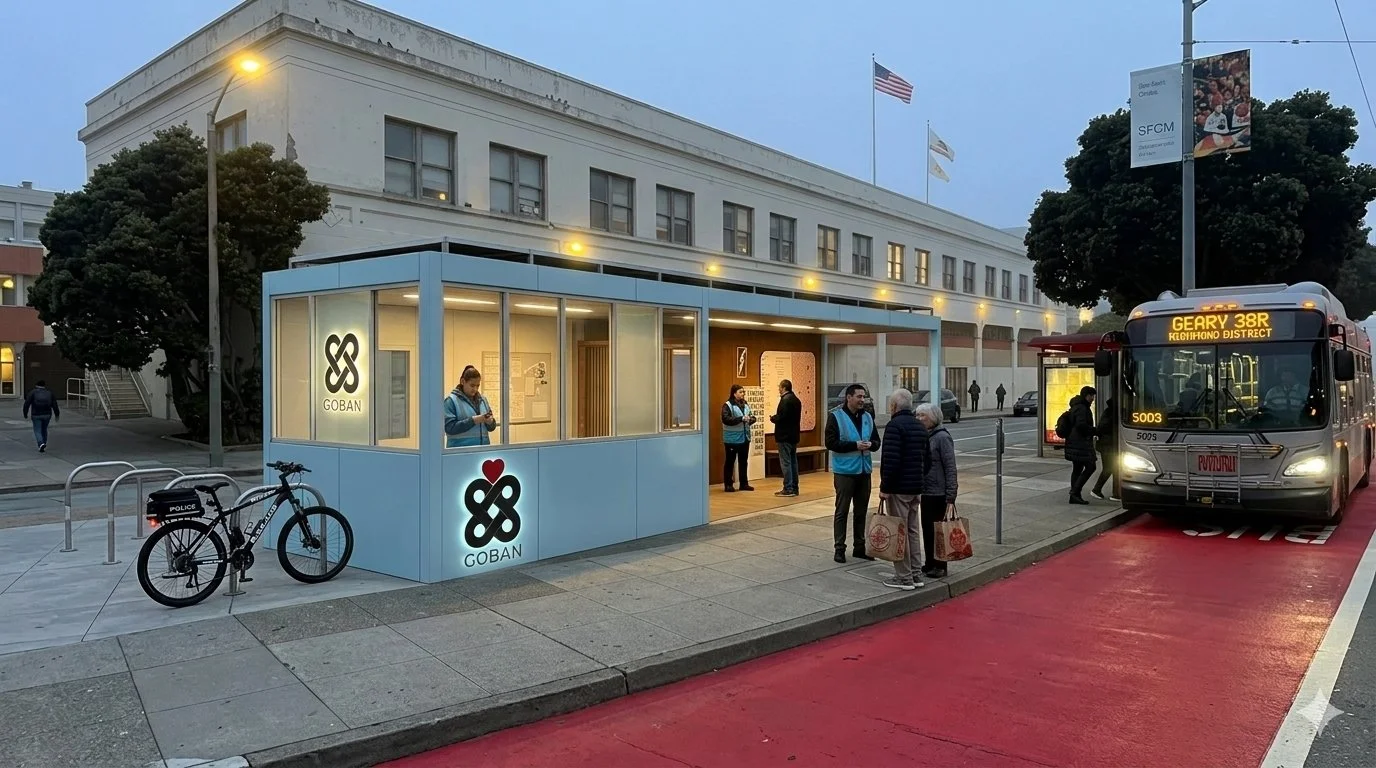
A Goban post at a Geary rapid-bus stop, with ambassadors and staff on the porch as part of the daily routine of the street.
The underlying iMod modular framework can easily support modifications to reflect the culture and aesthetics of each location. These can include architectural details and materials, public artworks and local history, as well.
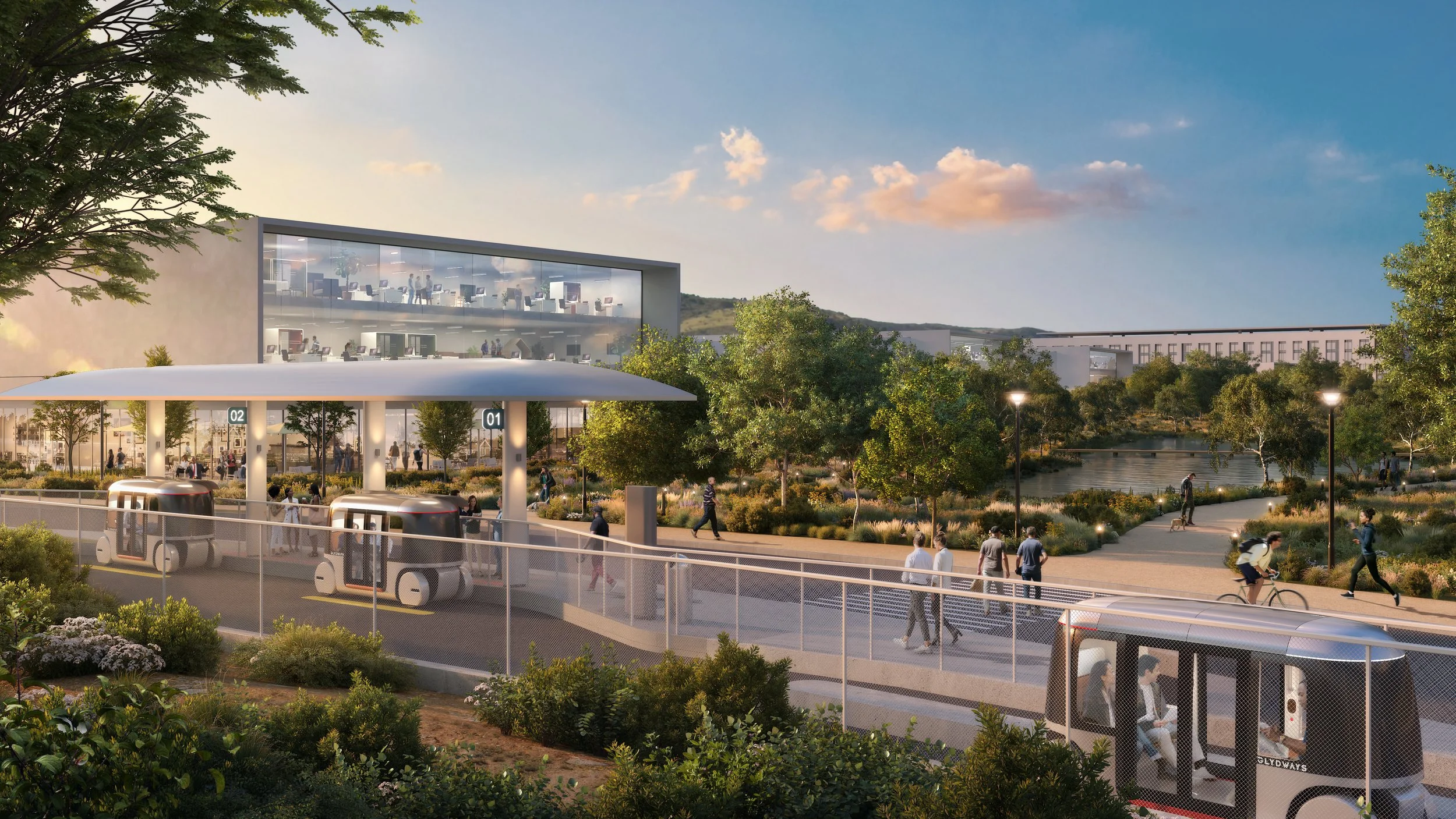
Sampling of the various facilities and concepts of the Infrastructure and architecture developed for the Glydways Transportation system.
Role_ Vice President of Urban Design and System Planning
Description_ In coordination with vehicle and fleet operations engineering, I led a team planning and integrating the Glydways mass transportation technology into a wide variety of urban environments in the US and around the world. I led the design, programming and user experience development of the prototype system stations and maintenance and servicing facilities (MSFs). Working with the lead structural engineers to create and patent a modular pre-manufactured elevated guideway system for rapid system implementation.
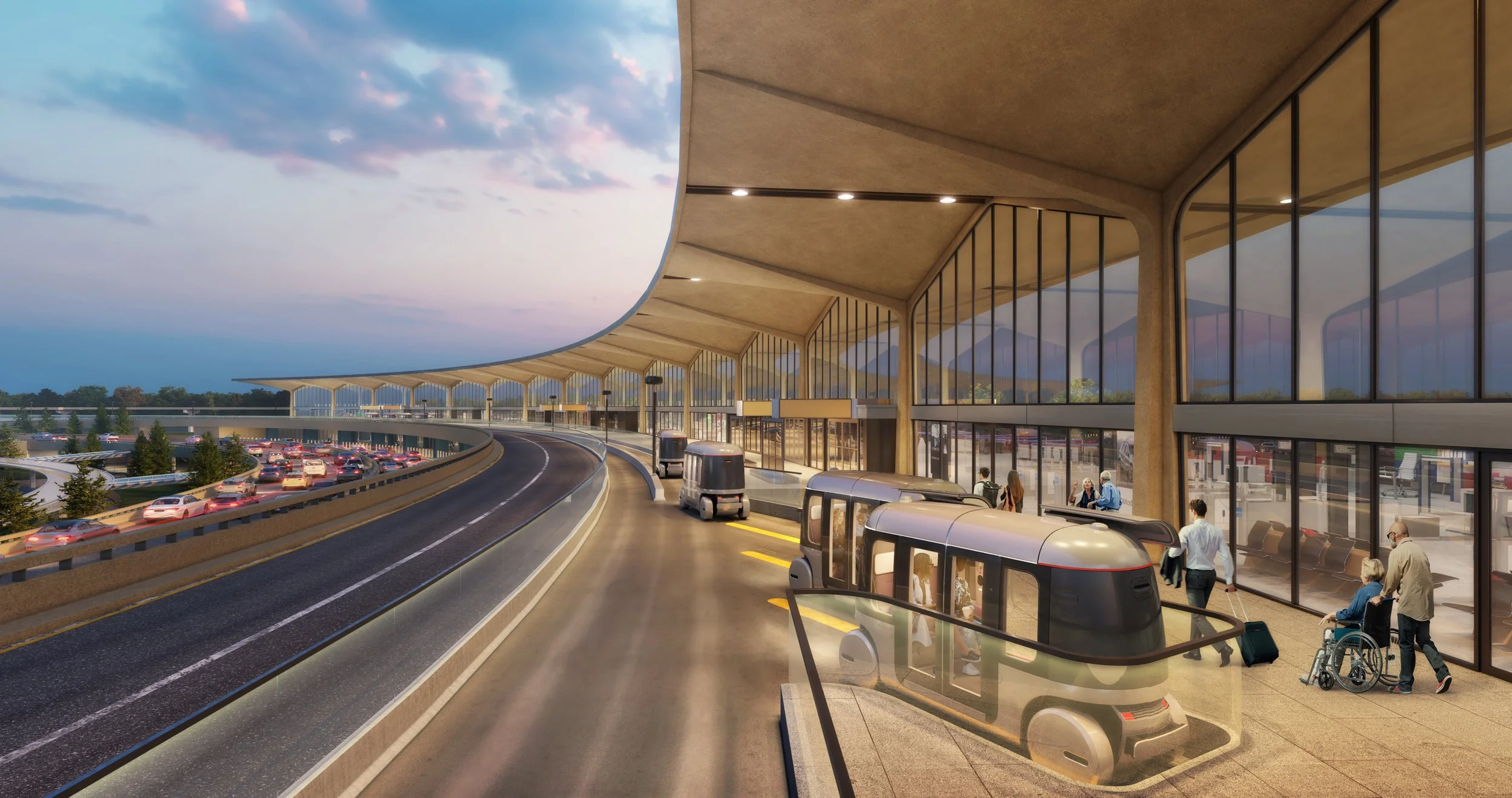
Aerial view of the Glydways system weaving through Guadalupe Park connecting Diridon Station to the Mineta International Airport.
Elevated integration allows for single level access to and from flights.
I designed the elevated Glydways station to enter the SJC terminal B at departures/ TSA level.
Illustration showing how a freeway capacity of mobility with Glydways can be integrated into a sensitive, public space like the Guadalupe Park.
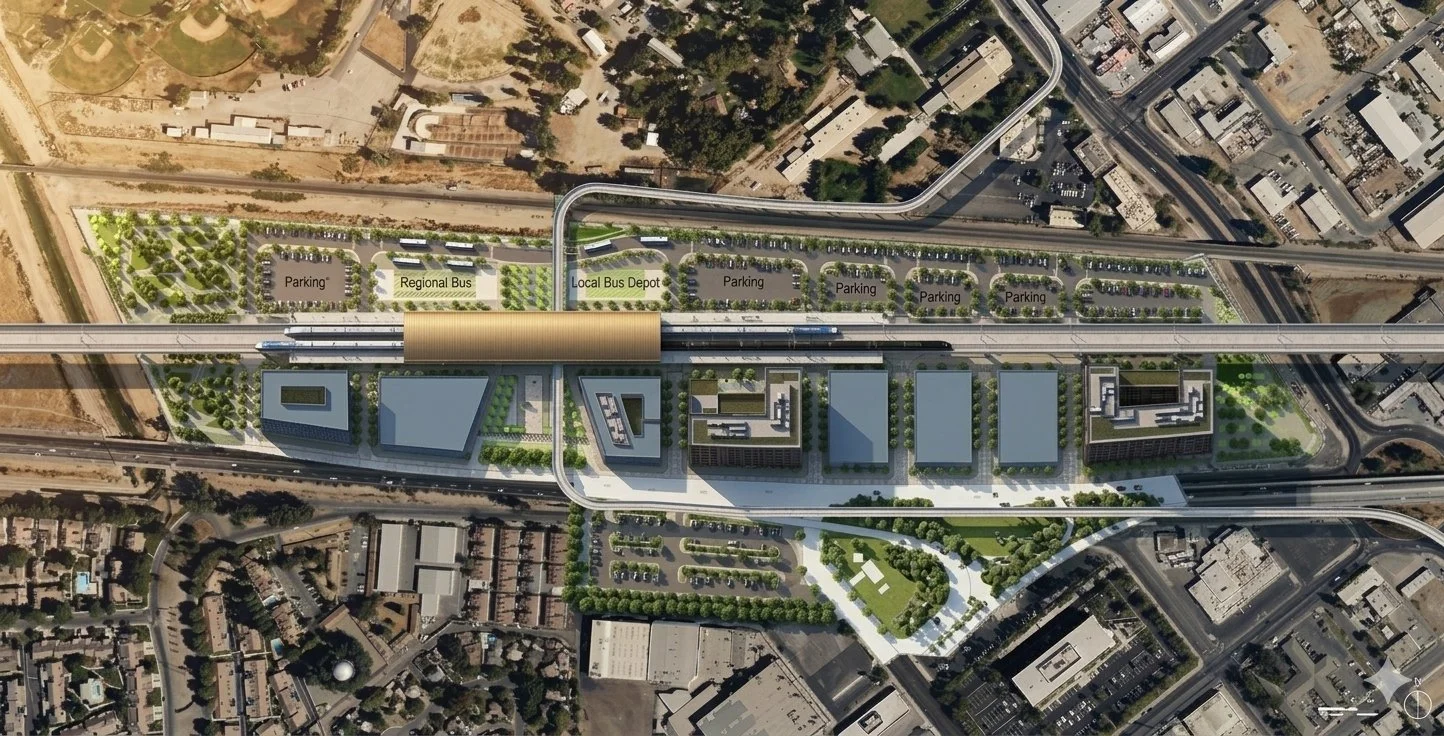
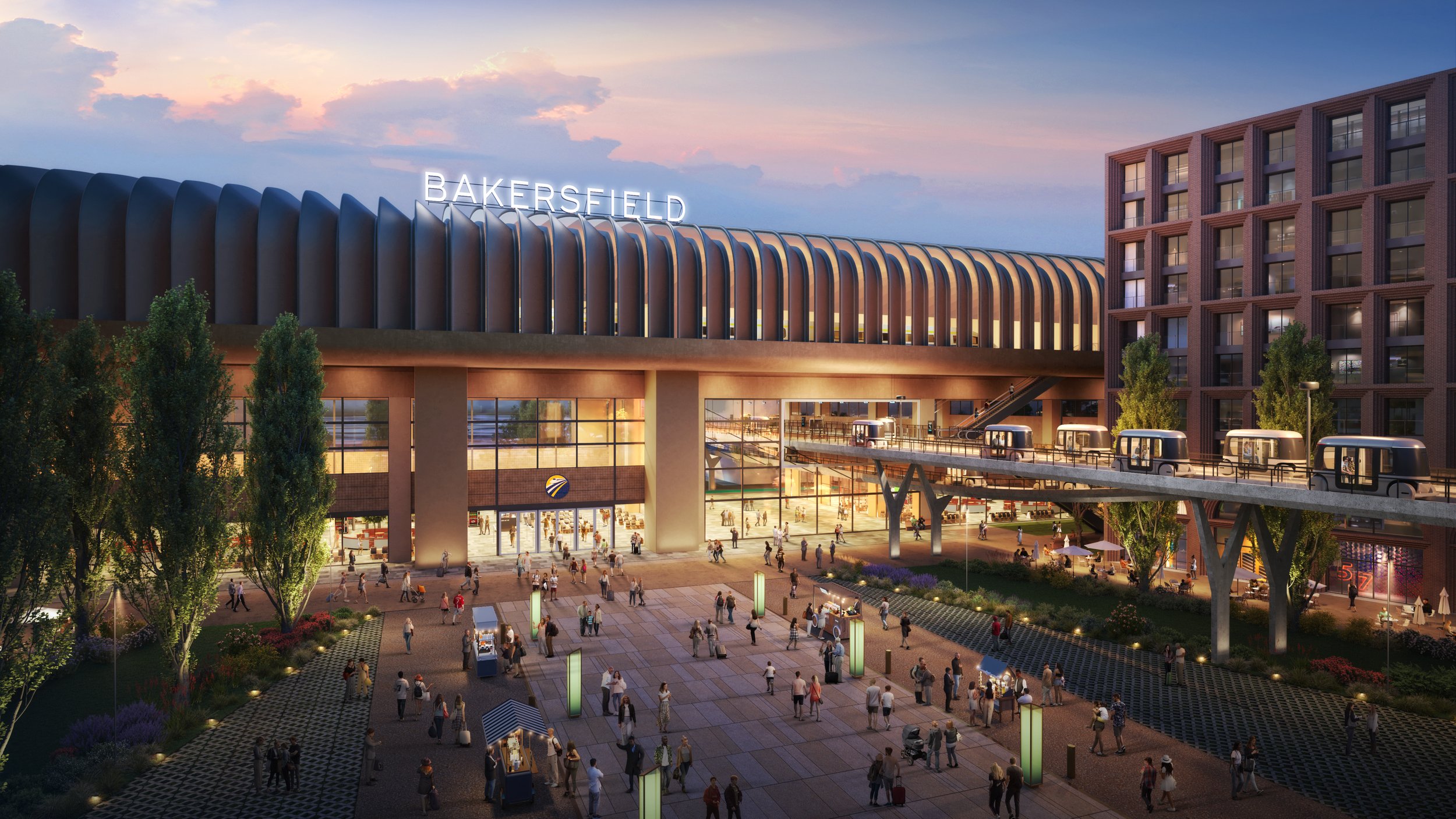
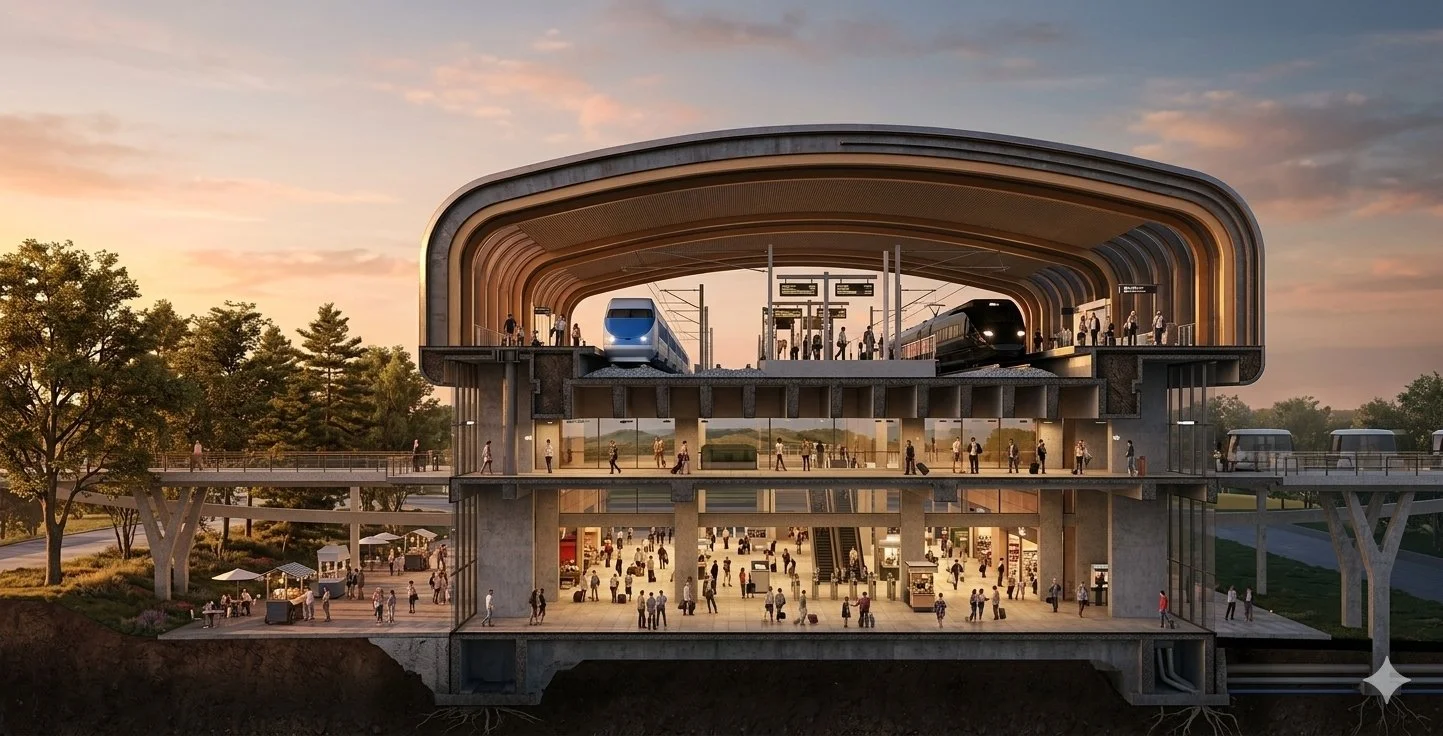
The Siteplan shows how the Glydways’ small guideway can pierce the train station above grade, but below the station’s main platform level preserving pedestrian movements at ground level and direct transfers to & from the HSR trains above.
In coordination with fleet operations engineers and external station area urban design strategies, I designed, modeled and illustrated 3 options for a fully-integrated Glydways platform to connect the surrounding community directly to the CA HSR trains.
Section view through the CA HASR station platform showing the Glydways platform below the main train platform for direct transfers and minimal site footprint.
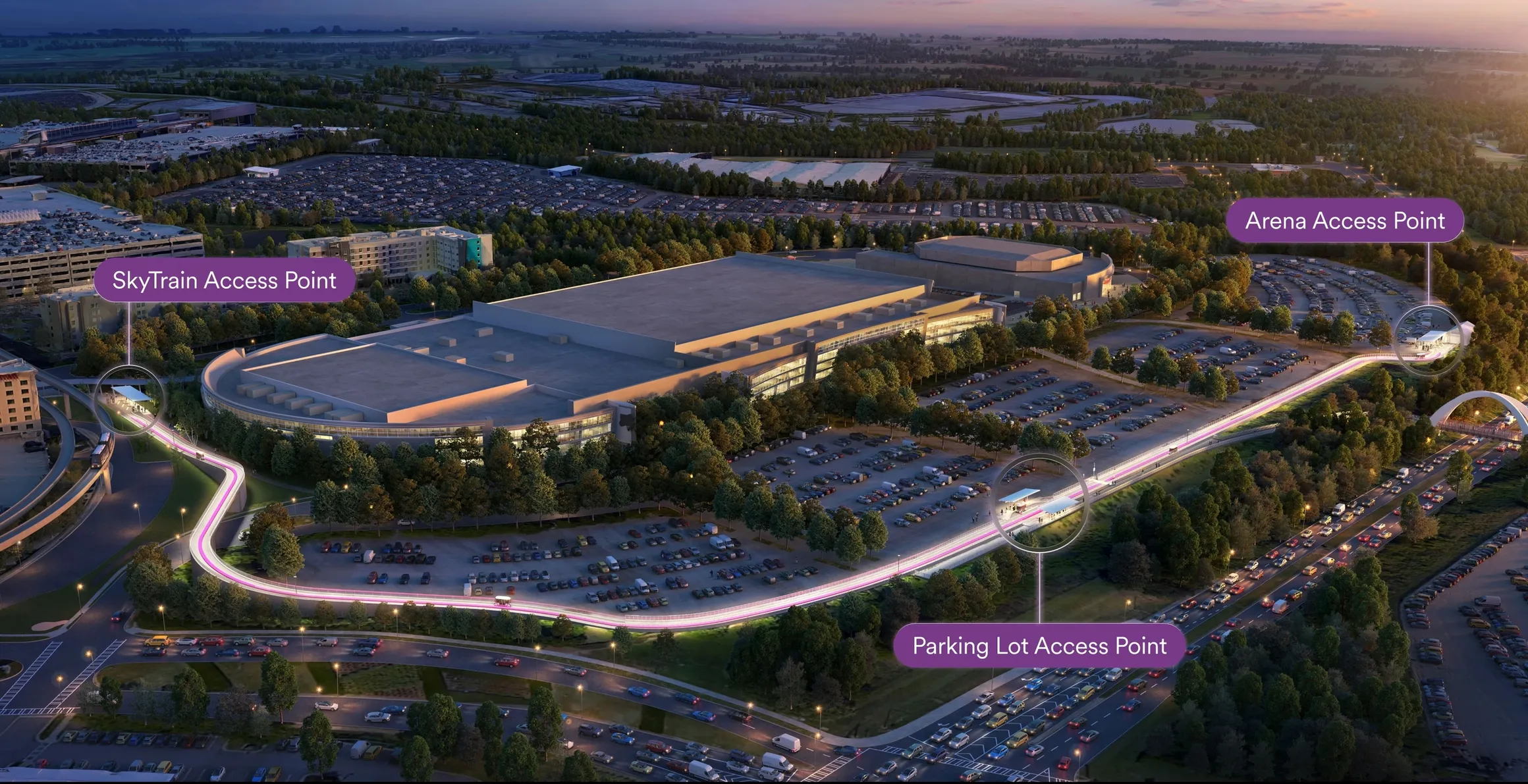
Beginning with a campus connector for the Convention Center and Sports Arena, this .8 mile pilot system will later expand to provide service to the MARTA system, Delta Airlines HQ and employee parking facilities and in later phases connect to the ATL International provide service to destinations the Airport.
In collaboration with MARTA and Fulton County, GA, Glydways created a publicly accessible pilot demonstration system to expand to serve the Atlanta Airport region. I designed and specified the alignment, stations and services facilities for quick, robust deployment, and on-going operations.
New Glydways Station adjacent to the Convention Center entrance.
Small, In-line Glydways Station.
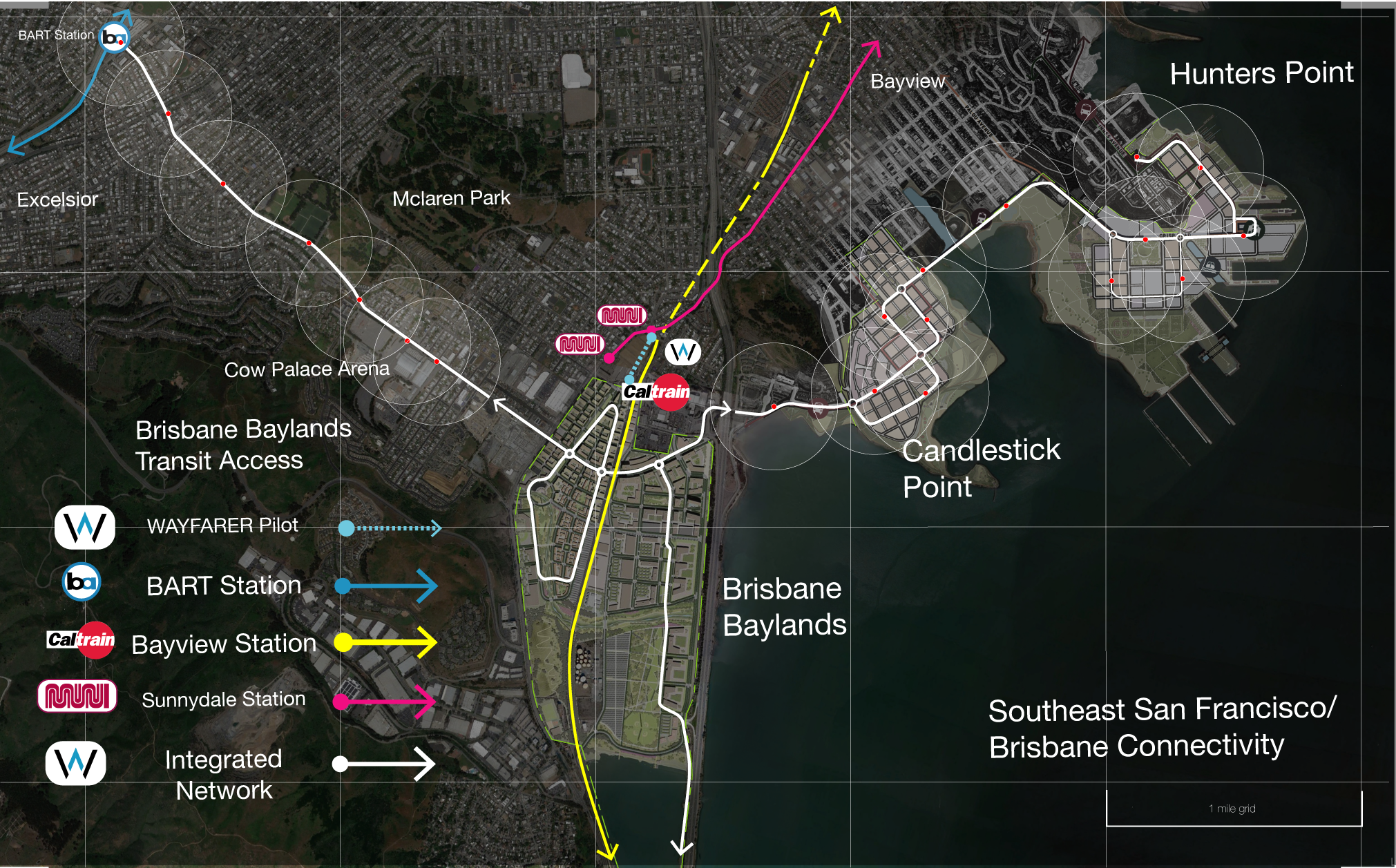
I developed routes and station location strategies to expand from an initial internal connector system developed in coordination with Peter Calthorpe at HDR for the Baylands Development in Brisbane, CA, the Southside Connector expanded service connecting future developments at Candlestick Point, Hunters Point in the east to BART at Balboa Park station with service along Geneva Ave.
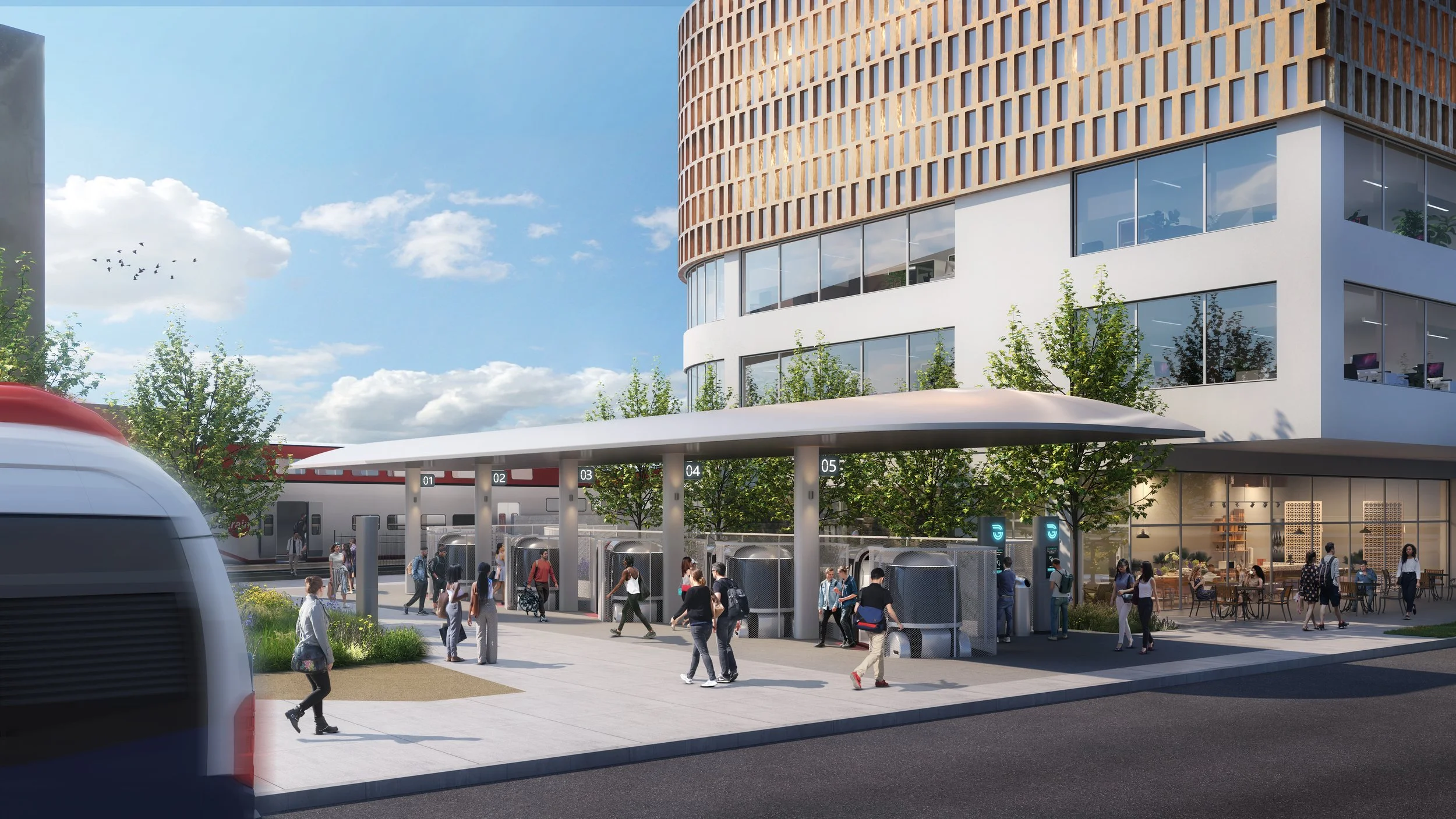
The Glydways route brings service directly into the Caltrain Bayshore station plaza. Planning & station design.
I designed small scale, affordable stations amidst the new commercial parcels providing easy, quick access the .75 mile trip to the CalTrain station and Bayshore Station.
Section Illustration showing multiple configurations of Glydways system: Main Trunk line, Slow speed “Plaza Mode” service, and Building-integrated elevator-enabled vertical service providing direct Vertiport integration.
Glydways Station designed for high temperature environment incorporating passive shading facade, localized overhangs, and air-current entrances.
Designed as a temporary demonstration, the platforms and guideway were all based upon modular construction for quick installation and low and easy, low impact removal or upgrade into permanent operations.
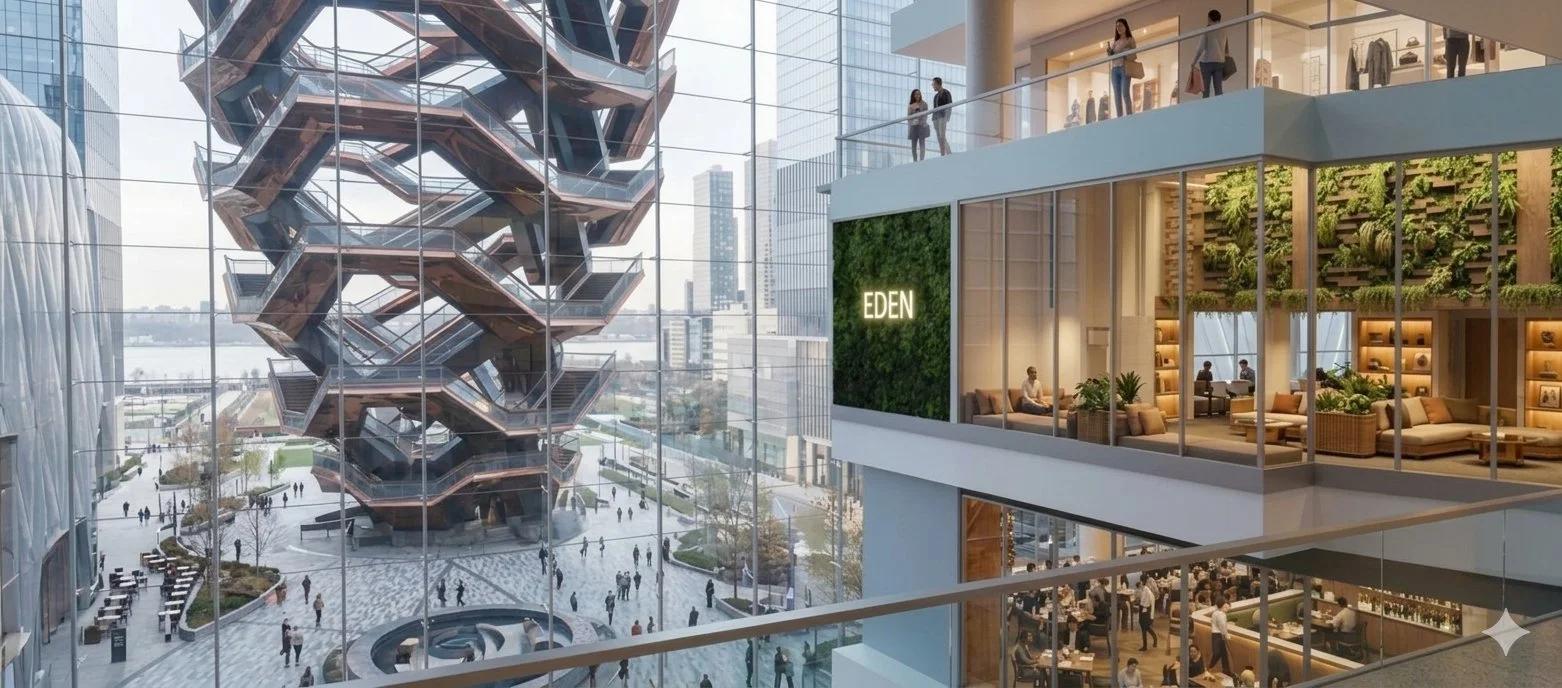
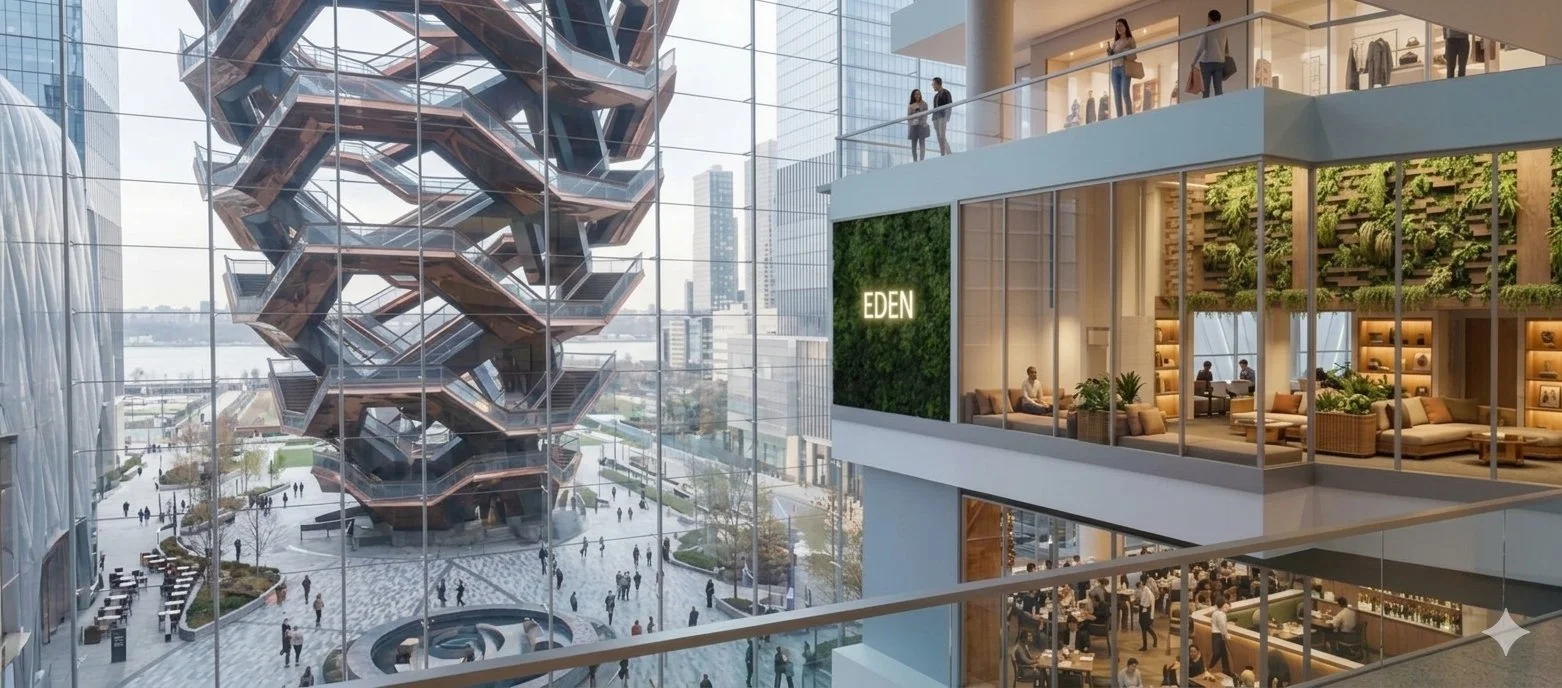
Working with the founder and a leading branding team, I helped create a new business model for urban professionals: an urban support facility. EDEN provides a base of operations in the city, with workspace, nourishment, and personal facilities like restrooms and showers. It lets people recharge, focus, and be their best selves in a very demanding environment.
I led the design and brand strategy. The concept began as a technology-driven convenience model. I pushed to reframe it around people: contactless retail alongside spaces for work, rest, and refuge. To get there, I used the research methods I developed over years of planning library systems. That meant observing how people actually move through and use the city, and studying the cultural and historical context of the site. That research shaped the program, the spatial layout, and the brand’s central idea: restoration and human connection as a counterpoint to Manhattan’s pace. The name began as “3DEN,” a nod to the third place, before we settled on EDEN: the original place of nourishment and wisdom.
The concept caught the attention of Hudson Yards leadership and Related Companies, which led to EDEN’s place in Phase 1 of the development.
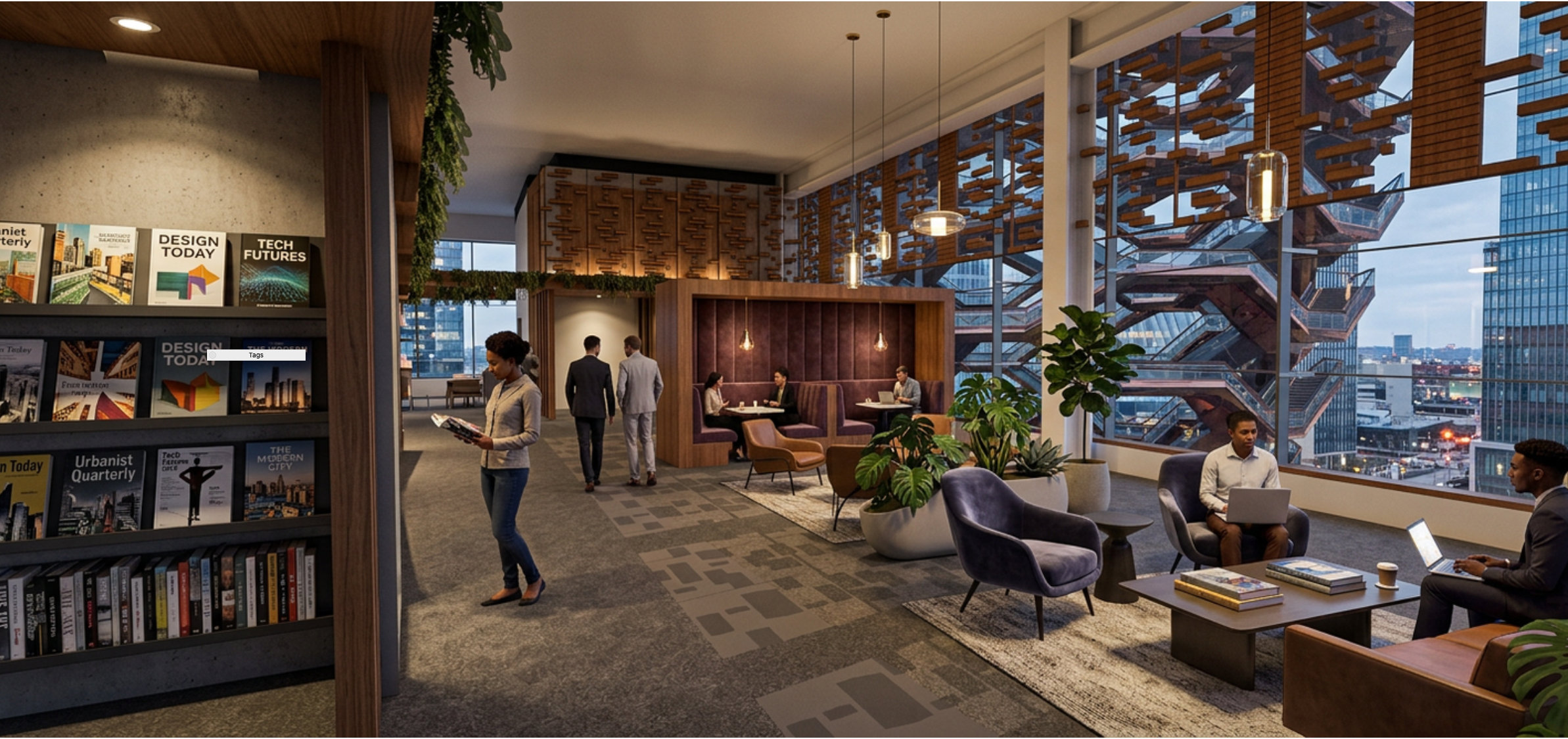
The management at the Related Company was so confident in the concept that we were able to secure a coveted space over looking the new plaza and Thomas Heatherwick’s massive sculpture, the Vessel. This significantly raised the attraction of the space for meetings and events.
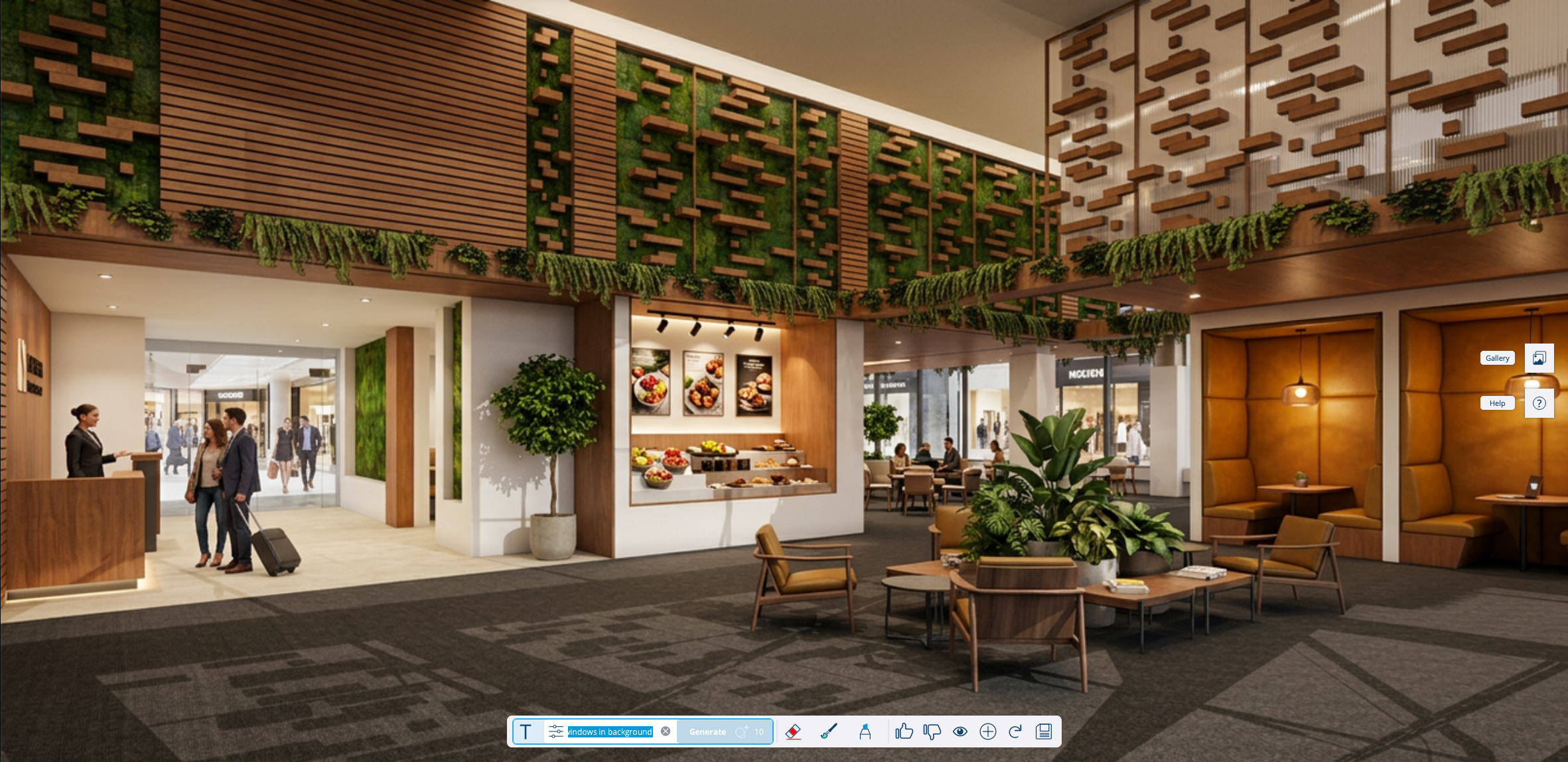
Some of our inspiration was the ideal first class lounge providing all the needs of the weary traveler, but here in the city.
The aim of the interior design - spaces, materials and lighting - was to create an oasis in the City where one could recharge, relax, refocus, maybe have a “good cry”. The focus was on the individual, the human being and all our needs, not so much the worker or the business.
Services_
Architecture + Creative Direction
Location_
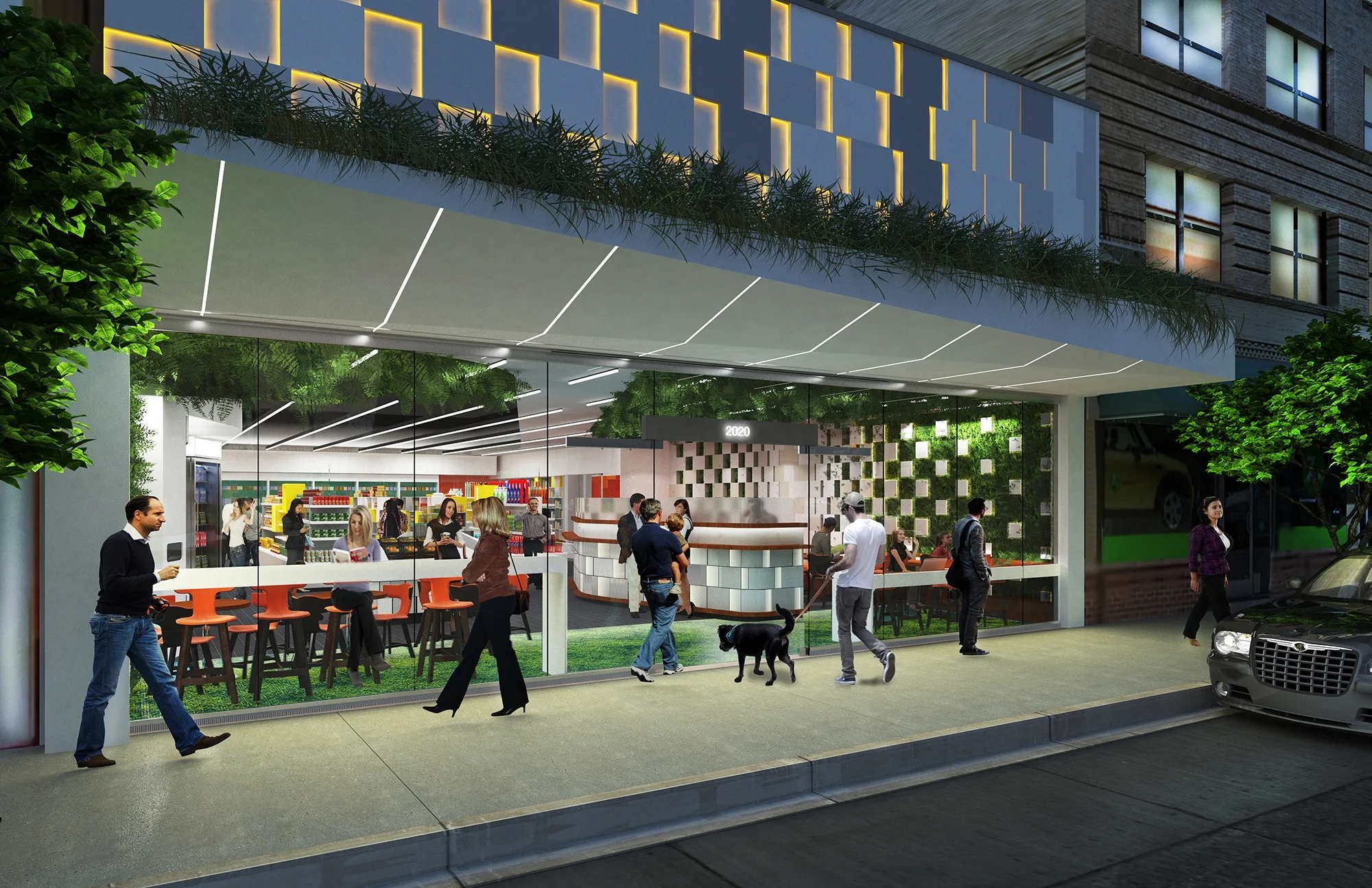
Retail Prototype Concept, USA
Description_
Redefining the retail experience, Spotlight seeks to leverage user data to improve product choices, create a sense of place and turn retail on its head.
Provided architectural planning & fixture design, visualization, storyboard and design sketches, as well as brand concept development.
Collaborators_
Elixir Design
Storefront
Street Facade
People Space
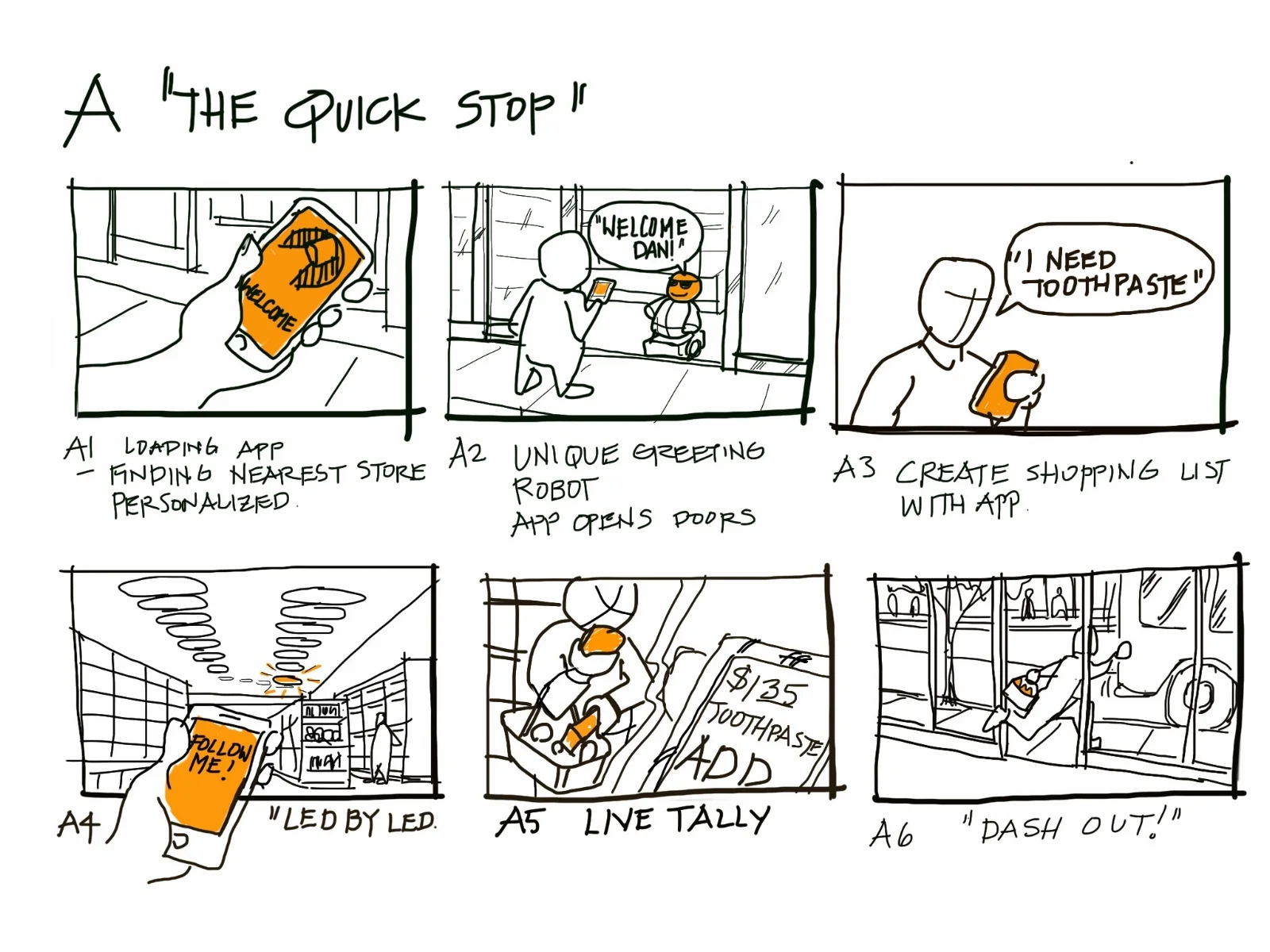
Visitor A - the quick stopper.
Storyboarding visitor behaviors aided the development of the space program, product mix and technical functional requirements.
Visitor B - The Explorer
Visitor C - The mobile worker
Services_ Project Architect, Visualization,
Location_ Oakland, CA
Description_ Provided interior design, 3D modeling and rendering, space planning, code research, documentation through planning approval.
Collaborators_ w/ Cafe Design & Architecture, 2015.
Floor Plan
Services_ Conceptual Design, material and systems selection, Visualization, IDW (Integrated design workshop) and public meeting facilitation.
Location_ Palo Alto, CA
Description_ replacement and integration of a small branch library and community center into a 62,000sf facility with a cafe employing special needs individuals from the community.
Role_ Senior Designer at Group 4 Architecture, Research + Planning, Design Lead, concept through completion, 2014.
Awards_
LEED-NC Platinum
Community Improvement Project of the Year 2015 – American Society of Civil Engineers San Francisco
Award of Excellence – California Parks & Recreation Society
New Landmark Library – Library Journal
Pinnacle Award of Merit – Marble Institute of America
Site Design Award – Santa Clara Valley Urban Pollution Prevention Program
Finalist, Public/Civic Project Structures Award – Silicon Valley Business Journal
Second Place, New Institutional Buildings, Educational Facilities – ASHRAE Golden Gate Chapter
Team_ David Gates, Landscape Architecture, O'Mahony and Myers, Lighting, Guttman & Blaovoet, MEP, Rutherford and Chekene Structural Engineers
Middlefield Road entrance. Public Artwork by Bruce Beasley.
A heritage Valley Oak is the centerpiece of the courtyard, host to open air activities year round.
Southwest facing sunshade “Solar Veil” protects reading areas overlooking the courtyard. Community outdoor projection screen for movies nights.
Retractable glass doors from community room to courtyard.
Site Plan
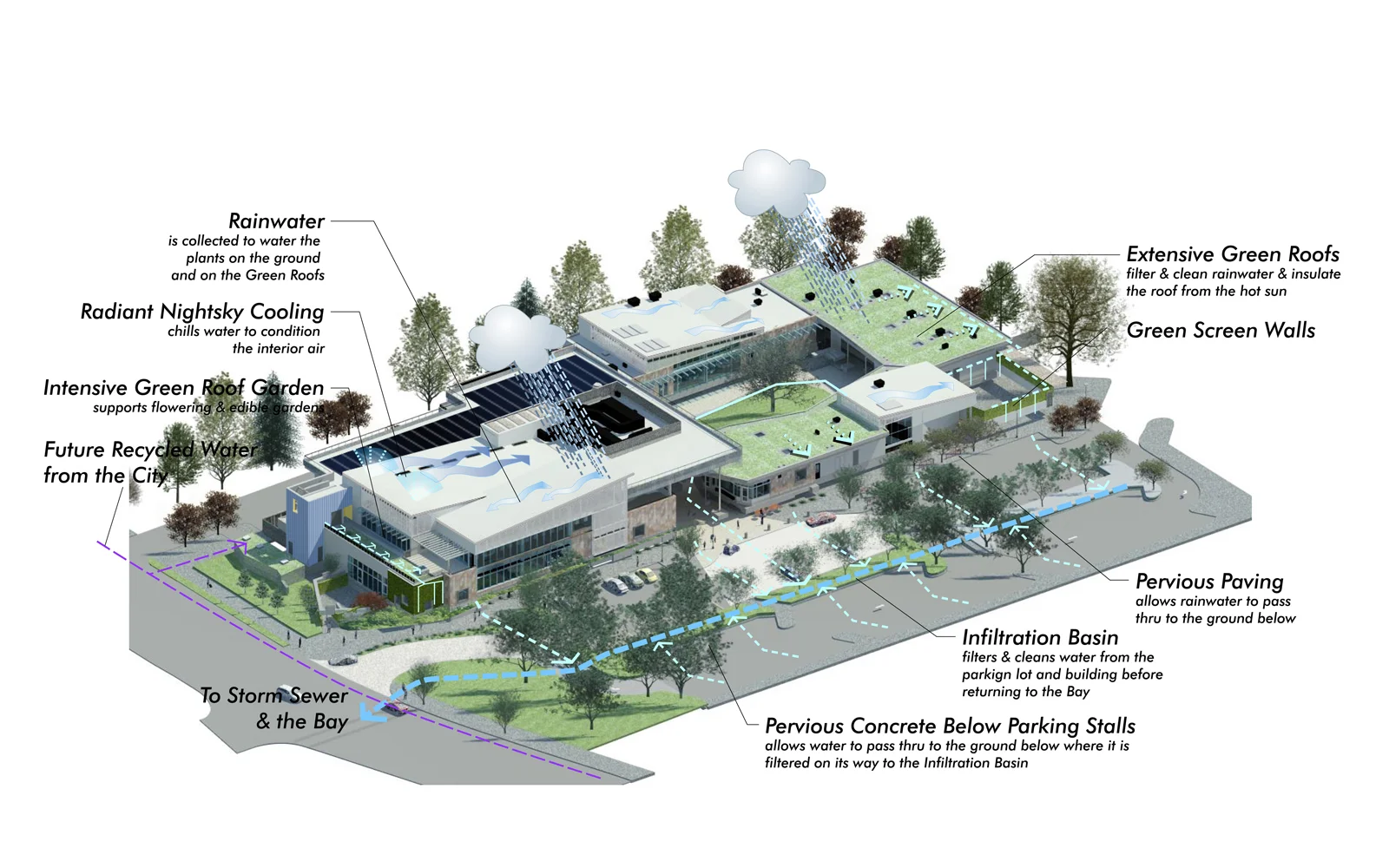
Water-related Sustainability Systems
Air and Material-related Sustainability systems
Role_ Project Design Lead, Group 4 Architecture, Research + Planning
Location_ San Jose, CA, 2009
Description_ The result of exhaustive community outreach and stakeholder engagement, the new Community Center serving a diverse urban neighborhood incorporating early child education, senior recreation, fitness center, classrooms for arts & adult education continuing ed, teen center and large, divisible multi-purpose event space.
Services_ All phases of design, Consultant coordination, material and systems selection, Visualization, IDW (Integrated design workshop) and public meeting facilitation.
Location_ Palo Alto, CA
Description_ replacement and integration of a small branch library and community center into a 62,000sf facility with a cafe employing special needs individuals from the community.
Role_ Senior Designer at Group 4 Architecture, Research + Planning, Design Lead, concept through completion, 2014.
Awards_
Merit Award – AIA San Francisco
Honor Award – AIA San Mateo County
Project of the Year – APWA Silicon Valley
First Place, Existing Institutional Buildings, Educational Facilities – ASHRAE Golden Gate Chapter
Preservation Award Winner, Contextual Infill – California Preservation Foundation
Institutional Restoration & Remodel Award – Palo Alto Stanford Heritage
Team_ David Gates, Landscape Architecture, O'Mahony and Myers, Lighting, Guttman & Blaovoet, MEP, Rutherford and Chekene Structural Engineers
Photography_ Cesar Rubio
Entry Plaza_ Unifying plaza space connection the library to the Palo Alto Art Center. Artwork, “Brilliance”
Entry Gallery_ Vestibule for public meeting room, south entrance from plaza.
Site Plan
Custom, water jet-cut shade system.
Role_ Senior Project Design Architect, Group 4 Architecture Research + Planning. Lead a team of colleagues and consultants from site concept design, programming, and all phases of building design and construction.
Description_ Located as the centerpiece of a new regional transit hub, the new Community Center creates a new landmark for the west side of Sacramento. The facility combines a blackbox theater for a burgeoning local theater scene, Art Galleries, with an early child education, senior recreation, fitness center, classrooms for arts & adult education continuing ed, teen center and large, divisible multi-purpose event space. Sustainable features throughout earned a LEED Gold certification.
Awards_
LEED-NC Gold/ Award of Excellence – California Park & Recreation Society/ Project of the Year – APWA Sacramento/ New Landmark Library – Library Journal/ Honorable Mention – ed+c Excellence in Design Award
West Capitol Avenue
Campus Entry
Black Box Theater
Light Sensitive Signage responds to headlights of passing traffic